

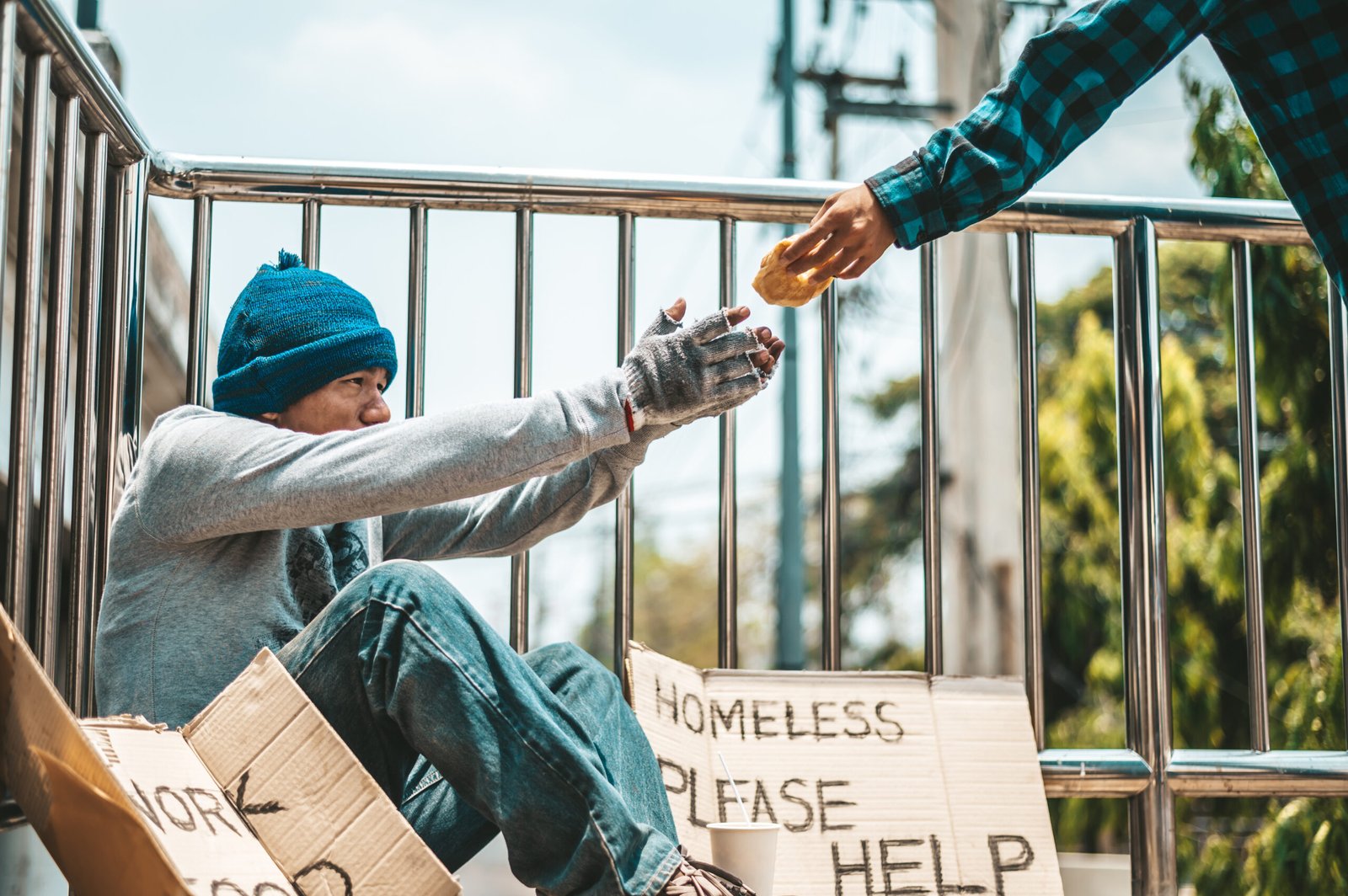
I was struggling with identifying a topic for my next blog. I recognized I wanted to write about morality and racism and its relationship to homelessness. My decision to choose discrimination as the focal point was made for two reasons. One, both morality and racism are embedded in the broader term…discrimination. Second, recent negative comments made by Trump and Vance about homelessness were blatantly discriminatory.
Definitions
- Morals are a society’s or an individual’s principles or standards of behavior concerning what is right or wrong, guiding conduct, and enabling cooperation and social order. They are based on the concepts of fairness, honesty, and kindness. While some moral principles are universal, morality can vary among different cultures and change over time, influenced by family, culture, and personal reflection. Ethics Unwrapped, utexas.edu, 2025
- Racism is characterized by or showing prejudice. Discrimination. Or antagonism against a person or people on the basis of their membership in a particular racial or ethnic group, typically one that is a minority or marginalized. Oxford Dictionary, 2025.
On August 12, Trump urged homeless people living in Washington D.C. to move out immediately and claimed he would give them places to stay far from the nation’s capital. He further commented that the “federal government will be removing encampments from all parks in order to rescue Washington from crime, bloodshed, bedlam, squalor and worse.” The White House stated that people would have ‘places to stay’ and pointed to forced housing in psychiatric institutions, shelters or jails. Alba, M., Strickler, L., Trump Said D.C. Homeless People Would Have Places to Stay…”, nbcnews.com, August 12, 2025
Trump’s words are disturbing but his attitude toward the homeless is even worse. Both are strong indicators of his negative principles or standards of behavior and lean toward racism. His comments are characterized by or showing prejudice, discrimination or antagonism against a person or people on the basis of their membership in a particular racial or ethnic group. In this instance, the homeless.
On August 21, Vance attacked homeless people who struggle with mental health issues. He stated, “I don’t know for the life of me what happened in this country where we decided that the compassionate thing was to let somebody fester on the streets instead of getting the treatment they need. He wondered why we accepted that it was reasonable to have crazy people yelling at our kids…you should not have to cross a street in downtown Atlanta to avoid a crazy person yelling at your family.” Einenkel, W., JD Vance Is a Heartless Jerk About Homeless People, Dailykos.com, August 21, 2025
Vance’s comments are immoral and racist. First of all, not all homeless people have mental health problems and don’t “yell” at families. Furthermore, to lump all homeless people into a mental health category without diagnosing severity and condition is totally discriminatory.
Biological Interpretation
Before discussing why millions of people discriminate the homeless, it is important to look at a person or groups’ behavior. To do so, biological wiring or neural connections should be considered.
Neuroscientists have researched and concluded that the brain is malleable. Neural connection changes occur rapidly at birth and continue through adulthood. Neural connection learning and development is related to a change in our thoughts, emotions, and behaviors.
The ability of the brain to change and rewire connections throughout life is a response to experiences and learning. Each individual’s neural wiring is unique, which can influence personality, skills and other traits.
The byproduct of brain changes affects cognitive function that influences learning, memory, and consciousness. Oldach, L., Brains Beyond the Wiring Diagram cen.acs.org, March 2024. Roberts, T., Are We Really Just Wired Differently? baen.com, 2025
Are We Just Brainwashed?
A term commonly used as technique to influence the fundamental beliefs, attitudes, and behaviors of individuals or groups is brainwashed. Through a controlled systematic. coercive, and often forcible means, such as psychological pressure and verbal manipulation individuals or groups have successfully changed the brain’s neural connections. www.thefreedomcenter.com, 2021 www.merriam-webster.com. 2025
After reading Trump and Vance’s comments, I thought about WHY millions of people discriminate, hold prejudice, enact hate crimes, and use hate speech toward the homeless. I came up with a number of reasons to share.
Environmental Influences
- Early childhood exposure and learning experiences influenced by parents, other family members, friends, role models, communities, religion, rules and laws, etc. have resulted in both positive and/or negative results.
- A child exposed to immorality, hate, prejudice, and discrimination of individuals or groups like the homeless acquire beliefs and attitudes that are perversely negative.
Negative Beliefs and Attitudes Toward the Homeless
- Fears (xenophobia, aporophobia), Denial, Hate (crimes and speech), Greed, Wealth, Power, Control, Elitism, Superiority, Class Structure,
Homelessness Behaviors
- Lazy, Dirty, Resource Abuse and Waste (safety net), No Contributions to Society, Take and Don’t Give Back, Endless and Constant
Discrimination Behaviors
- Negative exposure and experiences (physical actions, hate speech, lack of compassion and empathy, family and community immoral and racial attitude).
- Influenced by parents, siblings, friends, relatives, inappropriate role models, negative experiences, social media, witnessing hate crimes and speech.
- Systemic failure, inequalities, and inequities.
Solutions
- Insist that present-day policies and laws be exercised from a base of compassionate recognition.
- Create an educational system that produces citizens open to the world, but also capable of grasping the challenges of their place and time, people sensitive to extreme poverty, hunger, and the defenselessness of the vulnerable.
- Develop compassionate citizens who cannot only adopt the perspectives of those who suffer, but can commit to helping them. Cortina, Adela., Aporophobia: Why We Reject the Poor Instead of Helping Them, Princeton University Press, 2022